TL;DR: This article reviews nine alternatives to Replit's AI coding platform, ranging from developer-focused tools like Cursor and GitHub Copilot to no-code visual builders like Bubble, helping readers choose based on their technical expertise and whether they need quick prototyping or production-ready applications. Bubble is highlighted as the best option for non-technical founders, combining AI generation with visual editing for full control without coding knowledge.
Replit is a cloud-native coding platform used by over 40 million builders. It combines an online integrated development environment (IDE) with an autonomous "Agent" that can plan and build software for you. You might need an alternative if you're working on projects that need more control than AI chat provides, building without coding knowledge, looking for visual app building tools, or building production apps that require enterprise security.
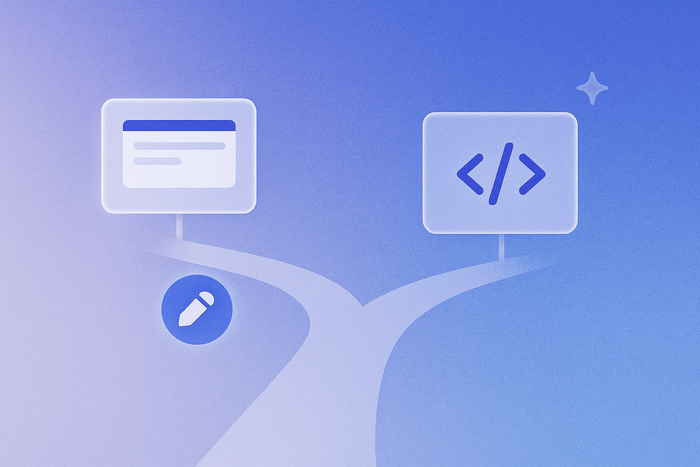
Alternatives to Replit include both pure developer tools like Cursor and fully visual AI app builders like Bubble that let you build without coding. Below, we'll cover nine options across both categories to help you find the right fit for your goals.
Why people look for Replit alternatives
Common reasons builders look for Replit alternatives include recent pricing changes limiting the free plan, getting stuck in prompt loops where AI can't deliver specific features, and needing more control over security and scalability for production apps.
For those building real businesses, the need for control over the final user experience often leads them to platforms that offer a clearer path from prototype to production.
1. Bubble
Bubble is the only fully visual AI app builder that lets you chat with AI when you want speed and edit directly when you want control. You start by prompting Bubble AI with your app idea. Within minutes, you get a functional app with frontend UI, backend database, and visual logic you can see and understand.
The Bubble AI Agent (currently in beta) acts as your development partner throughout the process. It can make changes to your app, plus explain what it built, troubleshoot issues, and help you understand how your app works. Or you can switch to the visual editor anytime to refine every detail yourself without needing to know how to code.
Bubble also lets you build native mobile apps for iOS and Android (not web wrappers) with a shared backend across all platforms.
Best for:
- Non-technical founders: Launch functional, scalable web or mobile apps without learning to code — chat with AI when you want speed, edit visually when you want precision
- Small teams: Build custom tools without hiring developers
- Agencies and consultants: Build solutions for multiple clients with unlimited dev apps, seamless project transfers, and access to Bubble's experts directory
- Enterprises: Build compliant, secure apps faster than traditional development allows
Limitations: Bubble's visual language has a learning curve (although not as steep a learning curve as code). That said, wnderstanding how your app works through visual development is a feature, not a limitation — it means you can fix issues yourself, make precise changes, and scale confidently without waiting for AI or hiring developers. While some edge cases requiring highly custom technical implementations may benefit from traditional code, Bubble provides enterprise-grade features that match what you'd build with traditional development stacks and it can handle the vast majority of production applications.
Pricing:
A free plan is available, while paid plans start at $59 per month.
2. Ona (formerly Gitpod)
Ona is a cloud development platform built around AI agents that autonomously generate, test, and review code for enterprise software engineering teams rather than non-technical builders.
Ona can be used to build multi-step workflow automation.
Best for:
- Enterprise development teams with existing engineering resources who want to automate repetitive tasks and parallelize development work
- Organizations looking to scale their development capacity without proportionally increasing headcount
- Teams working on complex, multi-step workflows that can benefit from AI agent automation
Limitations: Ona requires substantial technical expertise and is designed specifically for engineering teams, which might not be suitable if you're a non-technical builder. The platform's enterprise focus means it may be more complex than needed for simpler projects or individual developers.
Pricing:
A free tier is available, while paid plans start at $19 per user per month.
3. Cursor
Cursor is an AI-powered code editor designed for developers who want to speed up existing workflows. Because it is a fork of VS Code, it feels familiar to most developers and supports existing extensions.
Its "Tab" feature offers advanced multi-line autocomplete, while the "Composer" agent can write code and edit multiple files at once. For enterprises, Cursor offers a "Privacy Mode" where no code is stored on their servers, making it SOC 2 compliant.
Best for:
- Experienced developers who want AI assistance integrated into their existing workflows
- Development teams comfortable with traditional IDEs who want to speed up manual coding tasks
- Those working within established tech stacks who need flexibility across programming languages
Limitations: Cursor requires coding knowledge. You'll need to manage your own deployment, hosting, and infrastructure outside the editor. While the free tier is useful for testing, heavy users often hit usage limits quickly.
Pricing:
A limited free plan (Hobby) is available. The Pro plan costs $20 per month for unlimited completions and more "fast" premium requests. Business plans start at $40 per user per month with centralized billing and privacy controls.
4. Bolt
Bolt, built by StackBlitz, generates code quickly and gives you a visual preview alongside an AI chat for iterations. It runs entirely in your browser using WebContainers technology, meaning there's no local setup required.
It uses Claude 4.5 models to scaffold full-stack applications, complete with integrated hosting via Netlify and database connections via Supabase. The code is fully accessible for manual editing, and Bolt supports popular frameworks like React, Angular, Next.js, and Tailwind CSS.
Best for:
- Experienced developers who want AI assistance speeding up development
- Teams comfortable with code who need quick prototypes or want to clone existing app patterns
- Beginner developers looking for an AI coach to help them learn frameworks
Limitations: Bolt uses a token-based system for AI usage, which can be confusing for some users. While it handles prototypes well, users sometimes report integration glitches with payments and complex edge cases when trying to scale.
Pricing:
A free plan is available with approximately 1 million tokens per month (capped daily). Paid Pro plans start at roughly $25 per month for higher token limits.
5. StackBlitz
StackBlitz is a browser-based development platform that runs entirely in your browser using WebContainers technology.
The platform powers Bolt (alternative #4), providing the instant development environment while Bolt adds AI generation capabilities. It also allows you to turn Figma designs into live websites.
Best for:
- Developers who want instant development environments without local setup or remote server delays
- Teams doing rapid prototyping for web apps or AI models
- Educators and learners who need shareable, collaborative coding environments
Limitations: StackBlitz requires coding knowledge to work with the generated environments effectively. The browser-based approach might have limitations for applications requiring specific system-level access or custom server configurations.
Pricing:
You can get started with a free Personal plan that includes unlimited public projects. Paid plans are available for Pro, Teams, and Enterprise tiers. (Note: Specific pricing should be verified on StackBlitz's official pricing page.)
6. GitHub Copilot
GitHub Copilot is an AI coding assistant that works directly inside your existing IDE.
It helps developers write code faster by providing context-aware suggestions, multi-line completions, and explanations.
Copilot also offers chat assistance for documentation questions and instant edits. In agent mode, you can assign GitHub issues and it will autonomously write code, create pull requests, validate files, and respond to feedback.
Best for:
- Developers who want AI assistance integrated into their existing IDE without changing workflows
- Teams using GitHub who want AI agents that understand their specific codebase and organizational knowledge
- Enterprises needing governance controls, audit logs, and IP indemnity protections
Limitations: GitHub Copilot requires an existing IDE setup and coding expertise to use effectively. You'll still need to manage deployment, hosting, and infrastructure separately.
Pricing:
You can get started for free with a limited plan (50 premium requests/month). Individual paid plans include Pro at $10/month and Pro+ at $39/month. For teams, Business accounts start at $19 per user per month, and Enterprise accounts are $39 per user per month.
7. Zencoder
Zencoder is an AI coding agent platform. It can analyze your entire repository to deliver context-aware code completions and suggestions tailored to your project's structure and coding standards.
The platform can detect bugs during test runs or compilation and automatically fix them through agentic review loops.
Best for:
- Development teams who want AI assistance that understands their entire codebase
- Enterprises needing governance, compliance, and audit trails alongside AI automation
- Teams running complex CI/CD workflows who want agents that can handle multi-step tasks autonomously
Limitations: Zencoder is designed for experienced development teams and might be more complex than needed for individual developers or simpler projects. The platform assumes you have existing CI/CD workflows and technical infrastructure in place.
Pricing:
You can try Zencoder for free with a 7-day Starter plan trial. The Starter plan is $19/month (not per-user). Per-user paid plans start at $49/user/month for Core, with Advanced at $119/user/month and Max at $250/user/month.
8. Lovable
Lovable is an AI platform that lets you build apps and websites by chatting with AI. Prompt with your idea, and it generates a full-stack application using standard technologies like React, Tailwind CSS, and Supabase.
It features a two-way sync with GitHub, meaning you aren't locked into the platform—you can export your code at any time. This makes it popular for "vibe coding," where you iterate quickly through conversation.
Best for:
- Designers and non-developers spinning up quick landing pages or MVPs to share with stakeholders or investors
- Anyone who needs a polished prototype fast
- Projects where visual aesthetics matter more than complex features
Limitations: While great for front-end work, users report that the AI can get stuck in "loops" when trying to fix complex backend logic, burning through credits without resolving the issue. You may still need developer intervention for advanced functionality.
Pricing:
A free plan is available with limited credits. The Pro plan starts at $25 per month, with higher tiers available for business teams needing SSO and advanced security.
9. Vercel v0
Vercel v0 is an AI coding platform that features generative AI chat alongside a visual preview and traditional coding environment.
The AI can generate UI with basic functionality, write and execute code in several frameworks, and provide debugging guidance and code suggestions.
Best for:
- Experienced developers who want AI assistance speeding up frontend work
- Teams comfortable with traditional development who need quick interactive prototypes, landing pages, dashboards, or portfolios
- Developers looking for an AI coding assistant to help with familiar tasks rather than a complete app-building solution
Limitations: v0 focuses on frontend development and requires React knowledge to use effectively. You'll need to manage your own backend infrastructure, database, authentication, and hosting separately.
Pricing:
Individual plans include a free option with $5 in monthly credits. The Premium plan costs $20 per month with $20 in included credits. Team plans are available at $30 per user per month with $30 in included credits per user.
Find the right app builder for your ideas
There are many AI app builders available, but most tools fall into two camps: they're either developer-focused coding assistants (like Cursor, GitHub Copilot, Zencoder) that speed up traditional development, or AI chat interfaces (like Lovable and Bolt) that get you 80% of the way there but leave you stuck when you need to finish the last 20%.
Bubble takes a different approach. We combine AI chat with visual control over every aspect of your app, eliminating the endless re-prompting and unreadable code issues.
Plus, you get enterprise-grade security, built-in hosting and database, and infrastructure that scales with your app—all in one platform, so you're not managing multiple tools and vendors as you grow.
Check out our success stories for inspiration or get started with a free account.
Frequently asked questions about Replit alternatives
Is Replit no longer free?
Replit still offers a free Starter plan, but it has limitations. You get 10 development apps with temporary links, and they must be public. For unlimited private projects, faster cloud resources, and full access to the Replit Agent, you'll need the Core plan, which costs $20 per month (billed annually).
What is better, Bubble or Replit?
That depends on whether or not you can code. Replit is an AI-assisted coding environment for developers, while Bubble is a fully visual AI app builder that lets you build without coding. Bubble combines AI generation with visual editing for complete control without technical expertise.
Which Replit alternative is best for non-technical founders?
For non-technical founders, Bubble is the strongest alternative, combining AI generation with visual editing so you can build, launch, and scale without coding expertise or hiring developers.
Build for as long as you want on the Free plan. Only upgrade when you're ready to launch.
Join Bubble