
TL;DR: Brand elements are the visual, linguistic, and experiential building blocks, like your logo, brand voice, and customer service, that work together to form a cohesive brand identity. Strong brands start with a strategic foundation (positioning, values, and mission) and layer these elements consistently to build recognition and trust.
Great brands are easily recognizable: by their name, their logo, even just their color.
A memorable brand uses many branding elements together. But when anything can be part of your brand, it can be hard to know where to start.
This guide covers all 15 branding elements every startup needs, from the strategic foundations that guide your decisions to the visual, linguistic, and experiential assets that bring your brand to life.
What are brand elements?
Brand elements are the building blocks of your brand identity: The individual pieces that, together, shape how customers recognize and remember you. They include tangible assets like your logo, brand name, color palette, and typography, plus intangible ones like your brand voice, values, and positioning.
Most brand elements fall into a few common categories:
- Brand voice (how you talk to your customers)
- Brand story or narrative (how your brand talks about itself)
- Brand personality (the character and attitude your brand projects)
- Brand promise (what your brand offers to your customers)
- Brand values (what your brand cares about and supports)
- Brand positioning (how your brand is different from other brands)
It’s also worth knowing how brand elements differ from two related terms. Brand identity is the whole system your elements create together: The complete experience people have with your brand.
Brand image is different. It’s how your audience actually sees your brand, which may or may not match the identity you intended.
Strong brand elements help close the gap between the identity you build and the image customers hold.
This guide covers 15 essential elements across four categories: strategic foundations, visual identity, linguistic components, and experiential touchpoints.
- Strategic: Brand positioning, brand promise, brand values and mission
- Visual: Logo, color palette, typeface, illustrations and imagery, product packaging and presentation
- Linguistic: Brand and product naming, taglines and slogans, brand voice
- Experiential: Physical and sensory environment, digital experiences, people and mascots, customer service
Why strong brand elements matter
Brand elements aren’t inherently good or bad. They create positive or negative associations depending on your context, audience, and execution.
A strong brand identity helps people see you the way you want to be seen. It also helps you:
- Set clear expectations. Consistent branding lets customers know what to expect from your startup, from product quality to customer service tone.
- Stand out from competitors. Distinctive brand elements make you memorable in crowded markets where dozens of similar products fight for attention.
- Build audience loyalty. Strong brands create emotional connections that drive customer loyalty and repeat purchases over time.
- Generate organic growth. Memorable brands earn word-of-mouth referrals because customers feel confident recommending something recognizable and trusted.
Strong brands also let customers signal their own values to others. Someone wearing Prada and carrying Louis Vuitton sends a different message than someone in a Harley-Davidson jacket. Both brands help people express who they are.
Brand elements aren’t set in stone. They can evolve as your business grows, but any change should be deliberate and rolled out consistently across every touchpoint, not piecemeal. A brand that updates its logo on the website but not the app, or its voice in emails but not on social media, ends up feeling disjointed instead of intentional.
When building a strong brand, start with strategy. Define your brand identity, personality, and values first, so every element you add later tells the same story.
Brand strategy and foundational elements
A strong brand is built on a clear foundation (the “why” behind your brand) that guides every decision. Here’s where to start:
- Brand positioning is how you set yourself apart from the competition. In a crowded market, it answers why a customer should choose you and defines your unique place in the customer’s mind.
- Brand promise is the specific value you pledge to deliver to your customers every time they interact with your brand. It sets expectations and builds trust. For example, Amazon built its reputation on fast, reliable delivery and an easy returns process that removes the risk of buying something you haven’t seen in person.
- Brand values and mission are what your brand stands for beyond just making a profit. Your mission is your purpose, and your values are the principles that guide your actions. That’s what connects you with people who believe the same things you do.
Visual brand identity elements
Visual elements are some of the most common and essential parts of branding: The ones people see first. Your visual language shapes how your brand looks and plays a big role in how people perceive its personality.
Color palette
Your brand colors go way beyond basics like “blue” or “orange.” Your color palette should include specific hex codes to ensure brand consistency.
Some brands own their colors so completely that they become legally protected or instantly recognizable on their own. Tiffany Blue, for example, is widely recognized as a signature brand color that anchors the company’s identity.
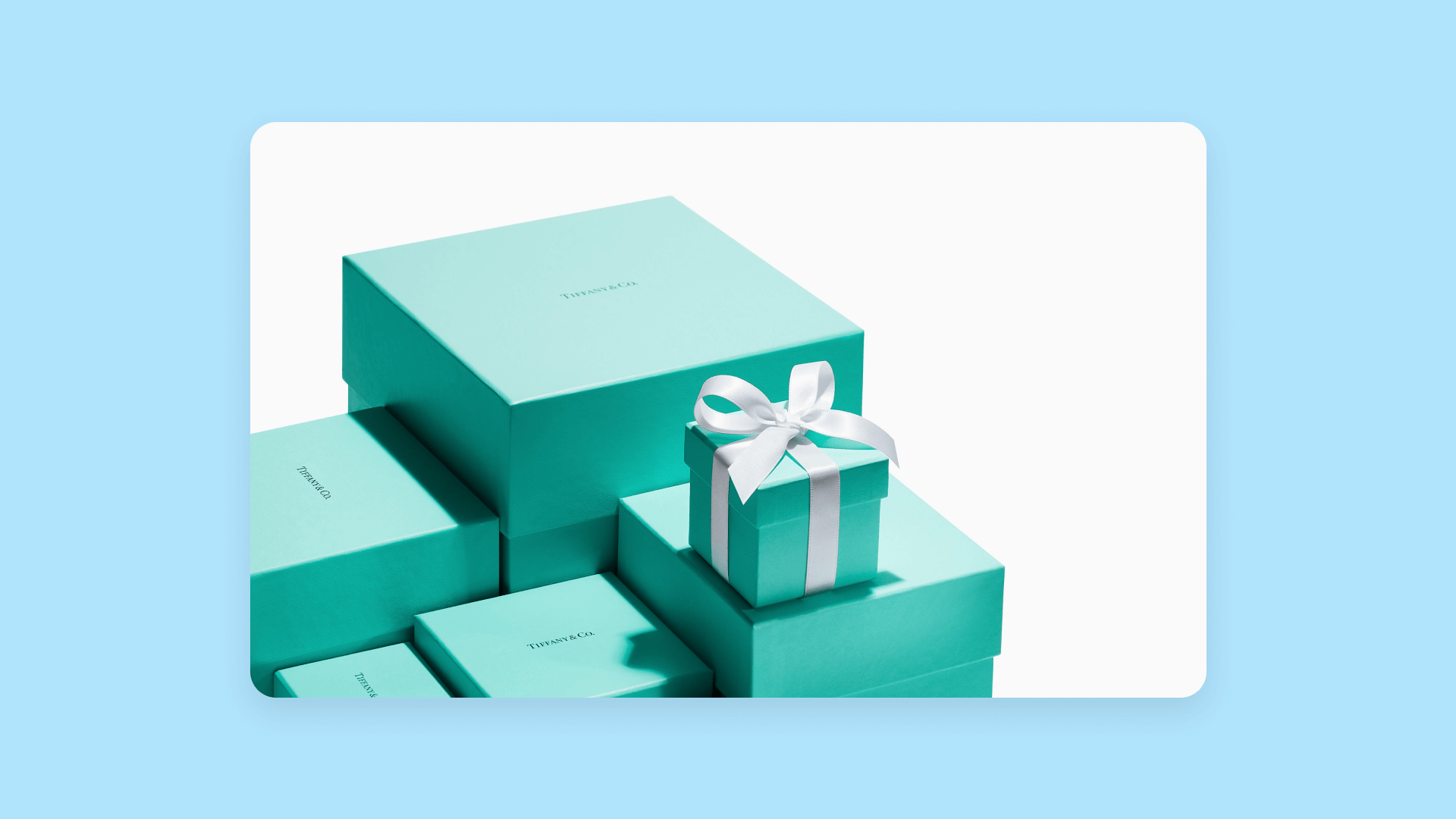
Your color palette should reflect your brand’s personality and values. A playful, youthful brand will have brighter colors, while a more established, luxury-focused brand will likely have more muted, “regal” colors.
Logo
The logo is often the most recognizable brand element, and the one every brand needs. The Nike swoosh, the McDonald’s “M,” and the Apple apple are all unmistakable on their own, with no text attached.
A great logo is simple, unique, and says something about your brand. Your logo might be accompanied by your brand name or tagline, which we’ll discuss in a bit.
Typeface
Your typeface is the lettering you’ll use across all branded materials and communication, from your logo and product labels to your website.
Keep in mind the difference between a typeface and a font. Typeface is the particular style of lettering (for example, Helvetica or Georgia), while a font is the particular variation of that typeface, such as size, weight, and style (such as Helvetica Bold 12).
You might use different fonts within the same typeface, or different typefaces for various materials. Either way, ensure that they’re aligned and recognizable as part of your brand.
For example, Spotify uses its own custom typeface, Spotify Mix. It appears in the app, on the website, and across marketing, so everything feels consistent.
Illustrations and imagery
Your brand might use illustrations, real photography, AI-generated images, or some mix of all three. Photos can range from polished and stylized to casual, behind-the-scenes shots of your team or product. Illustrations might be abstract or hyper-realistic, minimal or detailed. And if you’re using AI, know the risk: People can often spot that look on sight, and plenty of them don’t like it. Whatever you choose, it all adds up to the style of your imagery.
Beyond style, there’s also the content of your imagery: The specific characters or motifs that make it recognizably yours. For example, your illustrations or images may have a specific visual character that’s part of your brand (think Duolingo’s owl). Or you may have other specific images, illustrations, or image-based designs that are repeated and add to your brand.
Product packaging and presentation
If you have a physical product, your packaging and presentation are crucial brand elements.
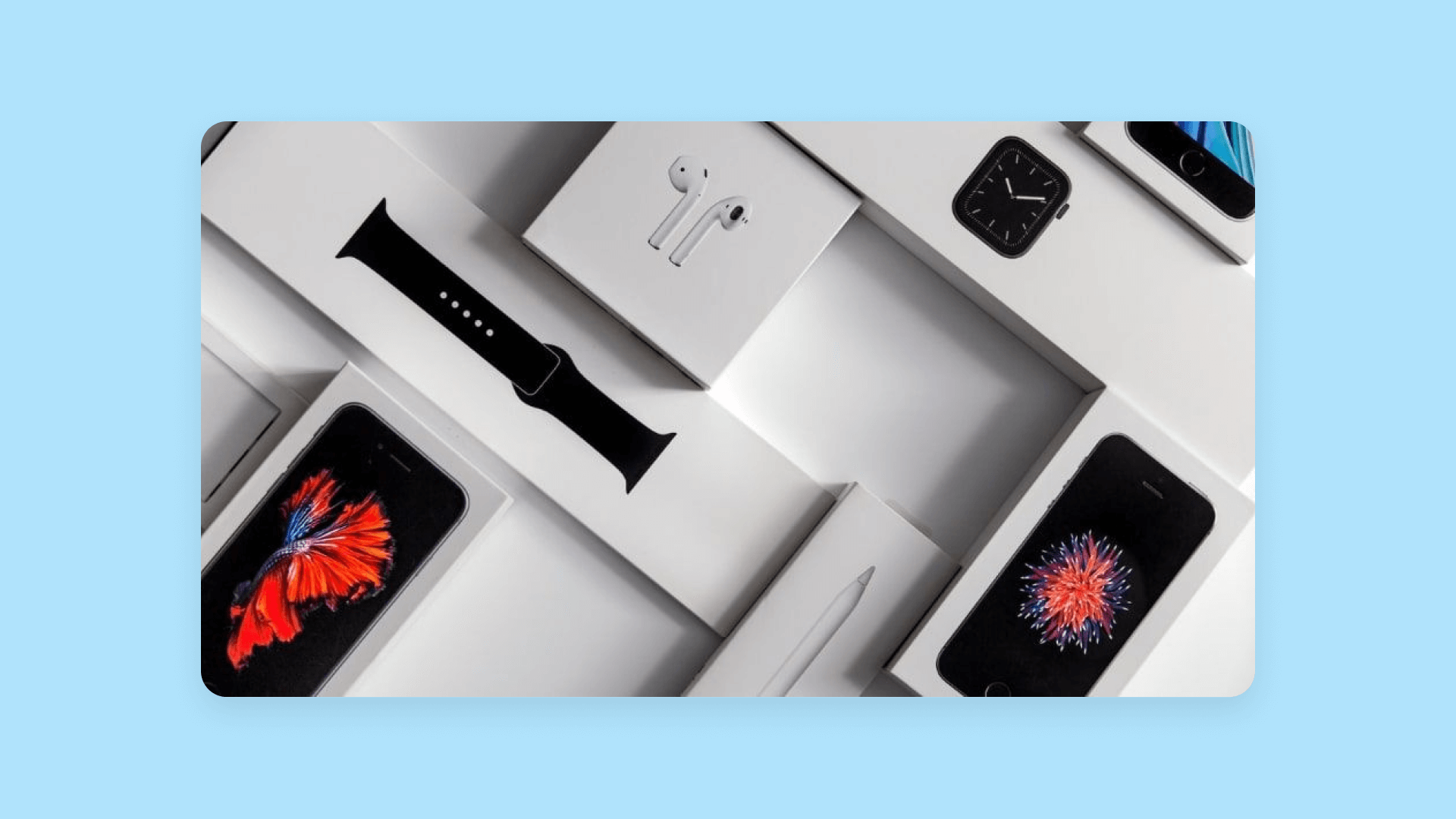
Product packaging includes product labels, containers, sizes, colors, wrapping, and shipping materials, like holiday Starbucks cups, Coca-Cola’s glass bottle shape, or Apple’s white minimalist packaging. Even everyday products like shampoo or tomato sauce can stand out with the right packaging.
But “packaging” matters for digital products too.
For online marketplaces, that means your product pages and how products are presented digitally. Consider how product pages are designed and what elements are included: For example, compare HubSpot products versus Etsy products.
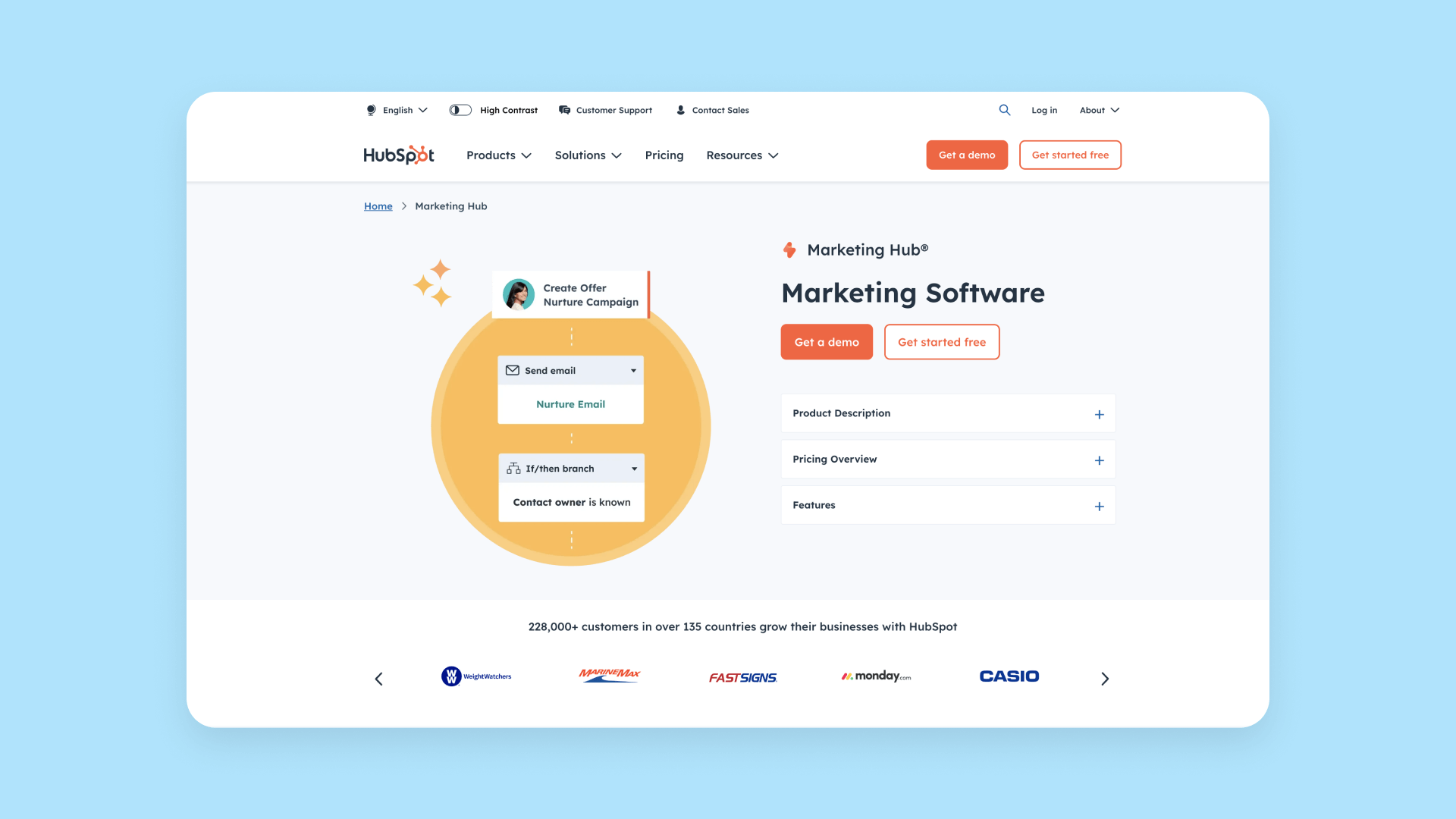
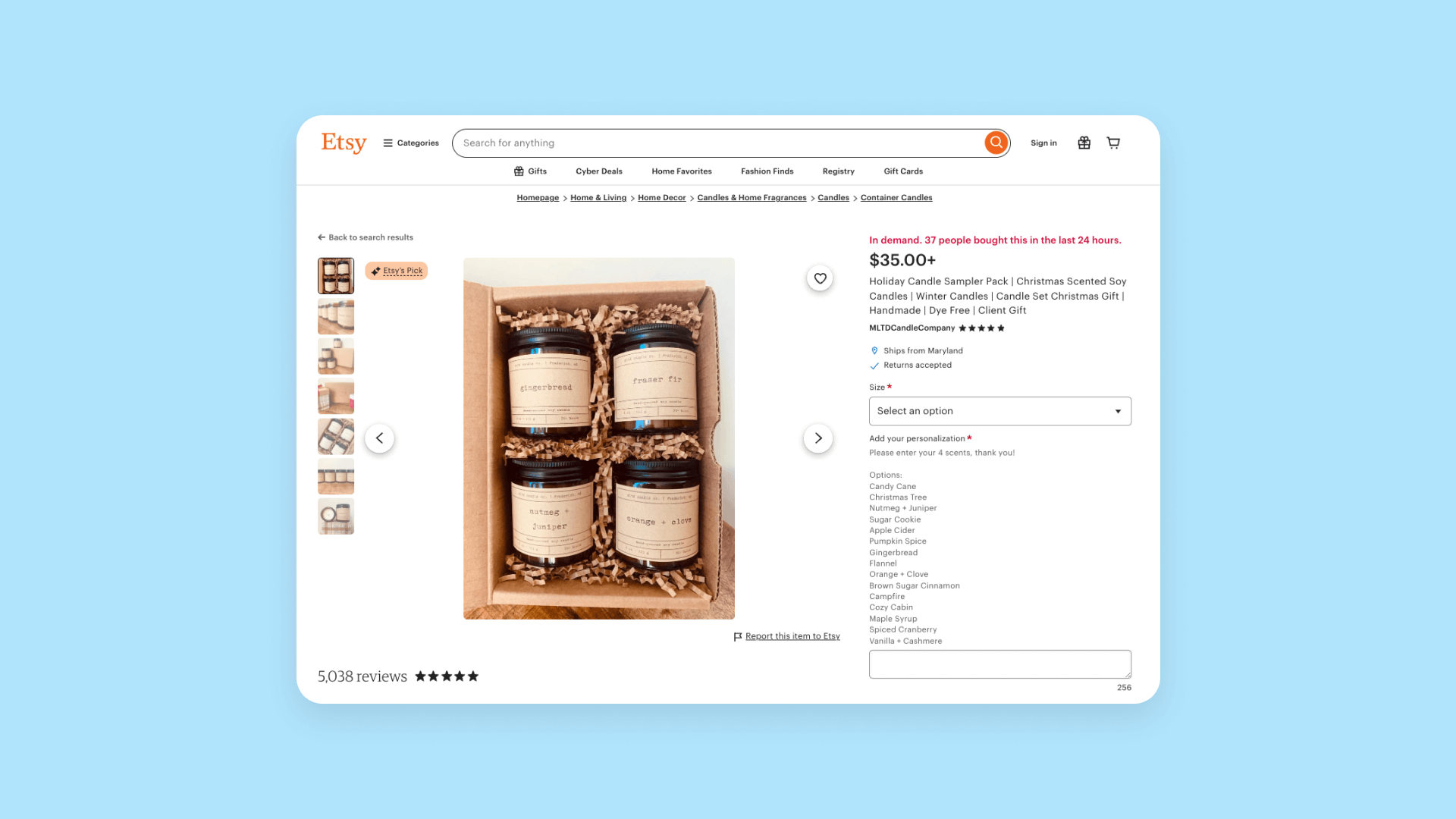
Page design, layout, and sizing all add up to shape how the brand and its products come across.
Linguistic brand elements
While we often think of brands in visual terms, linguistic elements matter just as much. Here’s what to consider:
Brand name
A good brand name captures your personality, your values, and sometimes what you actually do. For example, consider the difference between:
- Charles Schwab (banking and investments, legacy brand) vs. Robinhood (banking and investments via a digital app aimed at “non-investors”)
- Banana Boat (kid-friendly sunscreen and skin products) vs. Chanel (high-end perfumes and beauty products)
- Whole Foods (high-end groceries focused on wellness) vs. Trader Joe’s (value groceries with quirky, fun branding)
Your brand name doesn’t have to describe what you do, the way “Whole Foods” or “Dunkin’ Donuts” does. It can hint at something else about your brand instead, like your goals or values.
For example, Bubble founders Emmanuel and Josh chose the name “Bubble” as a wink to the concept of the “tech bubble” — one that they hoped to someday burst by creating a platform that allows even non-technical founders to build their own web and native mobile apps without writing code.
Product and feature names
Branded names for your products and services help you stand out from competitors and reinforce your brand’s personality.
For example, McDonald’s doesn’t just sell a hamburger: Its signature burger is the Big Mac. That branded name feels different from a Double Whopper at Burger King or an All-American Smash at Smashburger.
Product names can even come to define a whole category, like when we call tissues “Kleenex,” ask for a “Band-Aid,” or say we’ll “Google” something instead of searching for it online.
Taglines, slogans, brand promises
A good tagline or slogan sums up your brand’s values or promise in just a few words. For example:
- Nike’s “Just Do It” positions the brand around athlete-focused, high-energy motivation that pushes customers to take action.
- “Like a good neighbor, State Farm is there” emphasizes the brand’s promise of dependable, personal service when customers need it most.
- Apple’s “Think Different” tapped into a founder’s instinct to reject the default way of doing things and build something the status quo wouldn’t.
Brand voice
Less easy to define is your brand voice: how your brand communicates, both about itself and to your customers. It’s more art than science, but when done well, it adds another layer of recognizability and personality.
Calm and Patagonia sit at different ends of that spectrum. One leans warm and human, favoring quiet reassurance and small moments of connection. The other leans into big ideas, using facts and storytelling to show its commitment and responsibility to the planet.
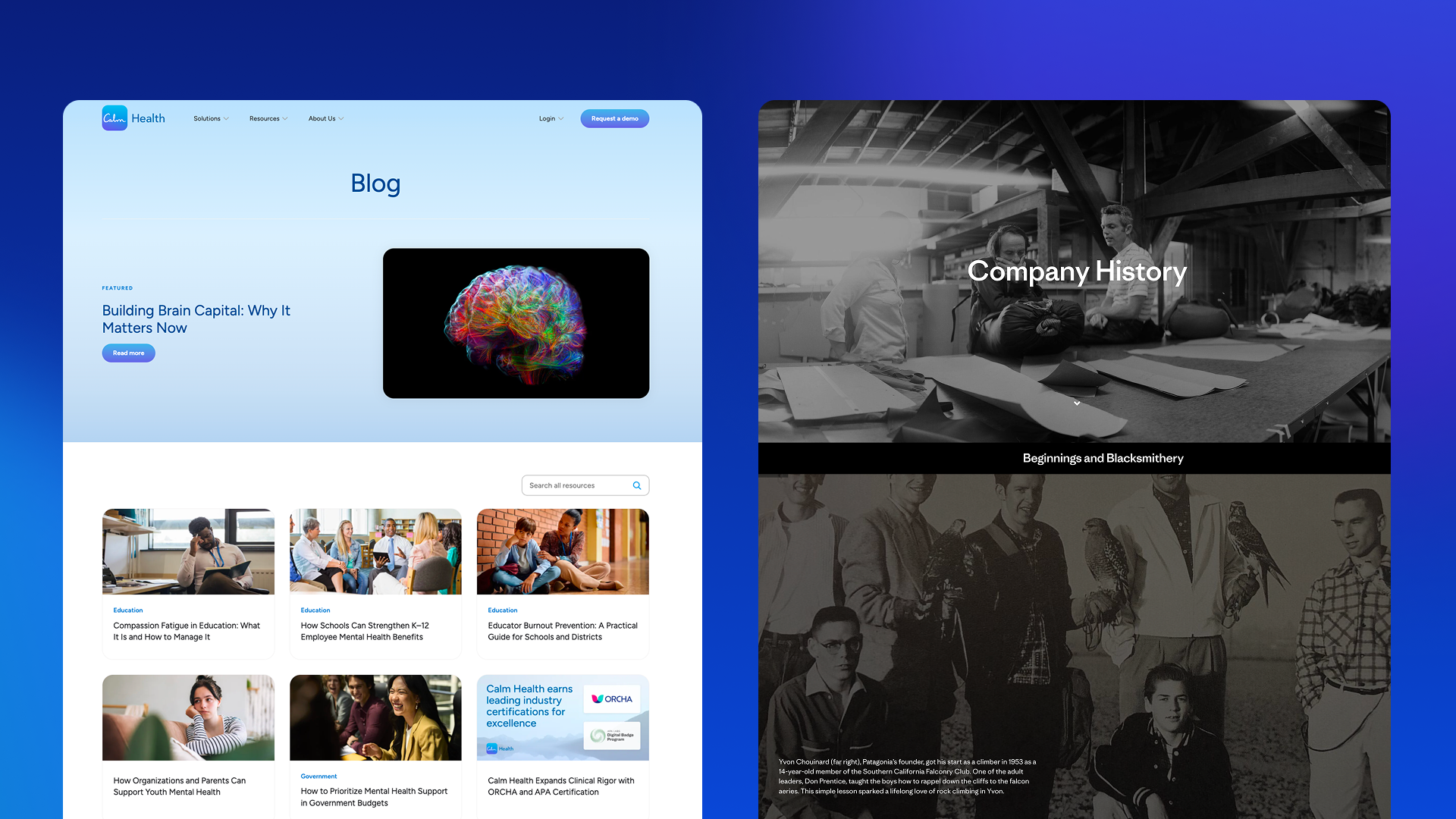
The way you say things is just as important as what you say.
Sound can be part of your voice too. Netflix’s “ta-dum” and Slack’s notification knock are short, recognizable audio cues that work almost like an audio logo. If you’re building an app, even a distinct notification sound or startup chime can reinforce your brand every time someone hears it.
Beyond the basics: Brand elements that create lasting impressions
Once you have a brand name, logo, colors, and typeface in place, what else you need depends on things like:
- Your product and how customers experience it, from packaging to in-app flows
- Your target audience and what they already recognize and trust
- Your biggest marketing channels, which shape the assets you need most
- Your brand personality, including the tone and attitude you want to project
- Your mission and values, and how visibly they show up in your product
- Your differentiators: The specific things competitors can’t easily copy
Almost anything can become a part of your brand, when done well. Any type of experience, emotion, or recognizable element can be “branded.”
To show you what we mean, here are a few non-traditional brand elements that can set the right brands apart.
Smell
Smell can become a branded asset too. Consider:
- The smell of Cinnabon when you’re walking through the mall triggers appetite before you ever see the storefront.
- The smell of Auntie Anne’s pretzels at the airport turns an ordinary terminal walk into a craving.
- Walk past an Abercrombie and Fitch or a Bath and Body Works, and you’ll smell the brand before you see it.
Smell is one of the strongest triggers of memory, so a signature scent can set your product or store apart from competitors.
Physical environments
The literal, physical environment of a store can also be branded. For example:
- The traditional “Golden Arches” outside many McDonald’s locations create a recognizable silhouette that reads as “McDonald’s” from a mile away.
- The Donut Hole in La Puente, California, is a drive-through shaped like an actual giant donut, and people go out of their way just to photograph it.
- Disneyland designs every sight line, sound, smell, and staff script down to the smallest detail, so the whole park feels like one immersive world.
These environments immerse visitors in the brand and create cues people recognize instantly.
Digital experiences
If you don’t have physical locations, digital experiences can also be a strong way to differentiate your brand. For example:
- Domino’s Pizza Tracker lets customers follow each step of their order, from placement through preparation and delivery or pickup, turning a passive wait into an engaging update loop.
- Sephora’s Virtual Artist uses AR (augmented reality) technology to let shoppers “try on” makeup and test out products virtually, reducing the friction of online beauty purchases.
- IKEA has offered AR-style visualization experiences, including the earlier IKEA Place app and current IKEA app and Kreativ tools that help users visualize furniture in their space before they buy.
Many kids’ toys and brands nail this element with digital games or “worlds” for kids to explore — such as LEGO’s digital apps and games, Disney Games online, or Roblox’s physical toy line, where a code on the packaging unlocks a matching item back in the game.
People
People or mascots can also serve as a core element of your brand. This can include real people like Chip and Joanna Gaines, branded groups like Best Buy’s Geek Squad, or mascots and characters like Flo from Progressive or the Geico Gecko.
While not right for every brand, a character, person, or mascot can effectively embody your brand personality and connect with your audience.
Customer service
Outstanding, specific customer service can become a defining brand element in its own right.
For example:
- Zappos built its reputation on customer service, including free shipping, free returns, and 24/7 support, subject to its stated return conditions.
- REI offers a 365-day return policy for co-op members, which is much longer than the standard 30- or 60-day return window most retailers provide.
- A local coffee shop barista who remembers your name and your order creates a personal touch that’s hard to replicate at scale.
Great customer service can set your brand apart and build loyalty, especially when your product feels a lot like everyone else’s.
Mission and values
For some brands, mission and values are the biggest reason customers choose them. For example:
- Bombas currently uses a one-purchased, one-donated model, donating an essential clothing item for every purchase made.
- TOMS is historically known for its One for One giving model. Today, its giving is broader, supporting children’s education, health, and well-being through community partners around the world.
- Patagonia’s “Action Works” and commitment to sustainability, giving back, and donating to green initiatives keeps environmental advocacy at the center of the brand.
If your brand is mission-focused, put those values front and center in your messaging and products. It’s what sets you apart from others selling something similar but not giving back the same way.
Brand elements in action: Real examples
The strongest brands make every element work together as one system. Here are a few real-world examples of what that looks like.
Oatly
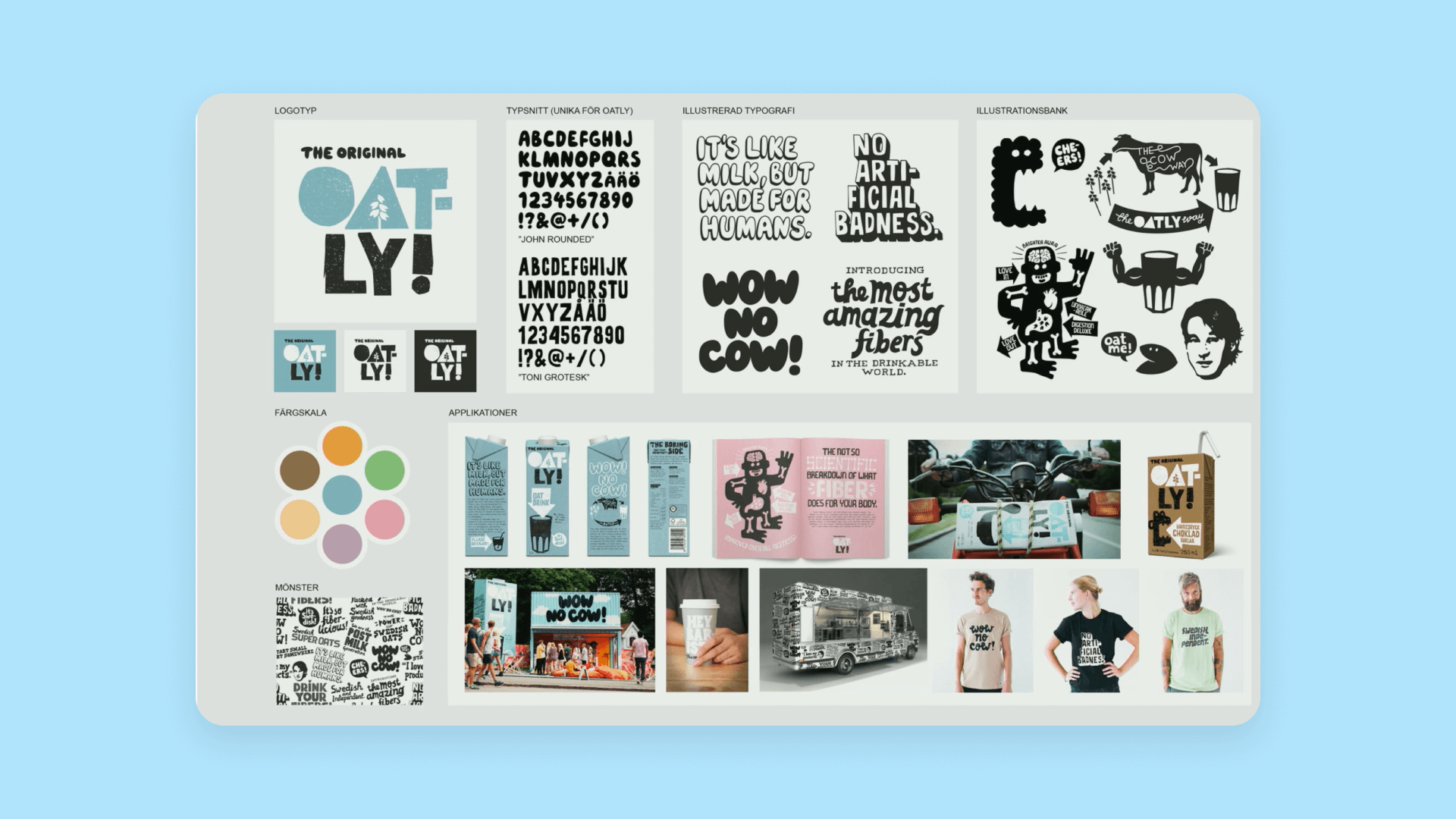
Oatly is an oat milk brand known for playful, challenger-style branding. One of the big elements of its brand is being a disruptor: It’s taking on the dairy industry by creating a non-dairy milk that’s tasty and high-end.
Consider how its branding creates a playful, disruptive brand personality:
- Typeface: The Oatly typefaces and fonts are bubbly and bold, reinforcing its playful personality across cartons, ads, and the website alike.
- Color palette: Distinctive colors and typography create a recognizable connection across brand assets, with the packaging serving as a consistent anchor.
- Brand voice: Its fun, irreverent, and edgy copy pokes fun at itself and its competitors, often on the packaging itself.
- Illustrations and imagery: Instead of using realistic images, it uses cartoonish illustrations that reinforce its disruptive brand and signal that this is not your grandmother’s dairy aisle.
Airbnb
Airbnb is one of the best-known home-sharing and vacation-rental brands out there, and its branding is a big reason why.
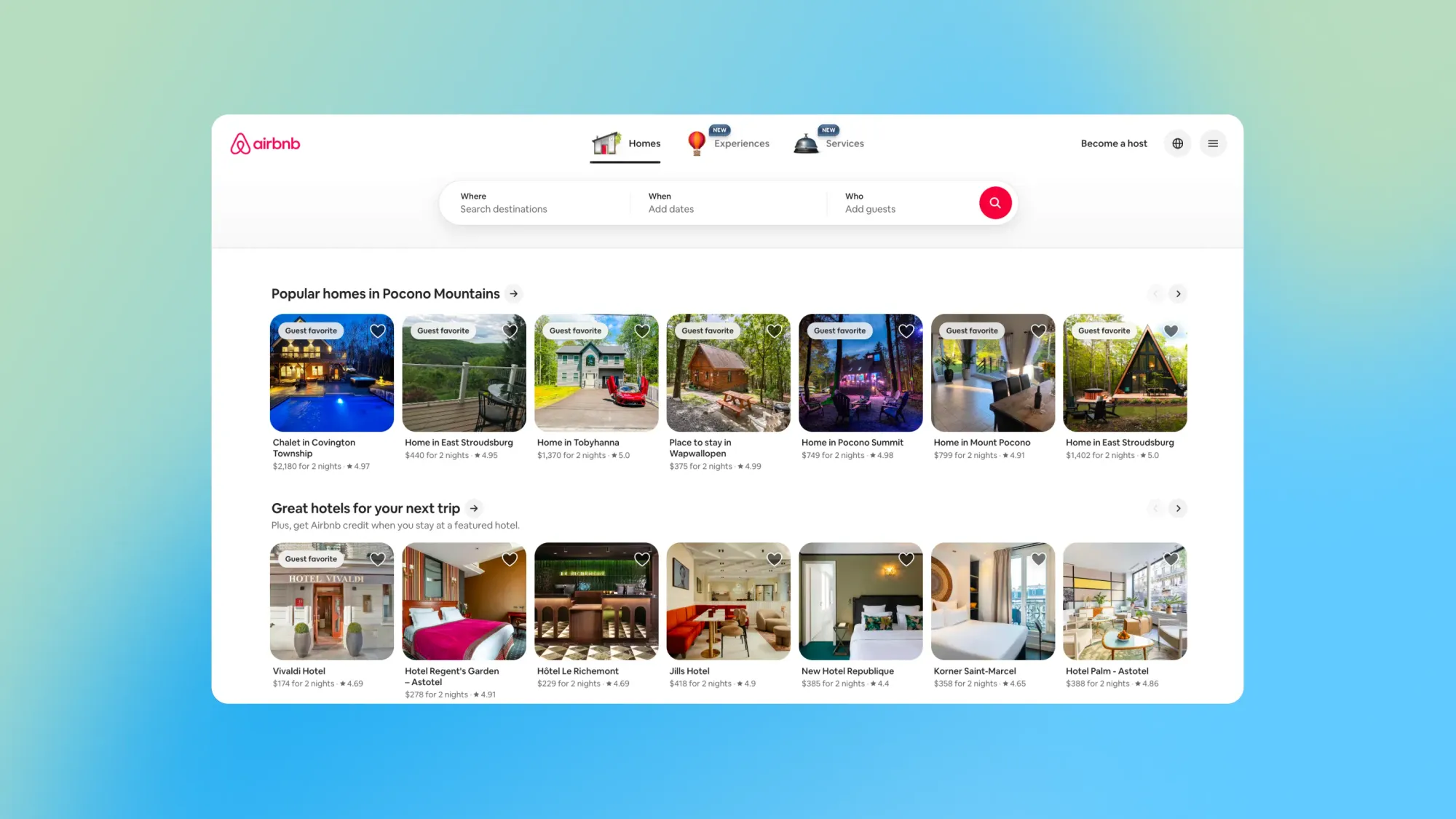
Airbnb’s look and voice have changed a lot over the years, but it keeps coming back to one idea: “belonging anywhere.” Here’s how that shows up:
- Product and feature names: Airbnb calls them hosts, homes, and stays instead of staff, rooms, and reservations, which makes it feel like more than just a hotel.
- Images and illustrations: Airbnb leans on real photos of what it’s actually like to stay in one of its listings, which sells the experience and shapes how people see the brand.
- Color palette: Airbnb’s signature pink and warm color palette give the app and its marketing a friendly, approachable feel.
Bubble
Branding matters just as much for digital products. It just shows up more subtly. With Bubble, we wanted our branding to reflect what we’re actually trying to build: a way for you to create real apps without getting stuck behind code you can’t read. Everything about how Bubble looks and sounds is meant to feel as clear and in your control as the apps you build with it.
Here’s how that shows up in our own branding:
- Color palette: We kept our colors clean and minimal, with plenty of white space, because we wanted the product to feel as clear as the workflows you build with it, not buried in code.
- Illustrations and imagery: We chose visuals that make the product feel understandable rather than intimidating, since the ability to see how AI and the visual editor work together is the whole point.
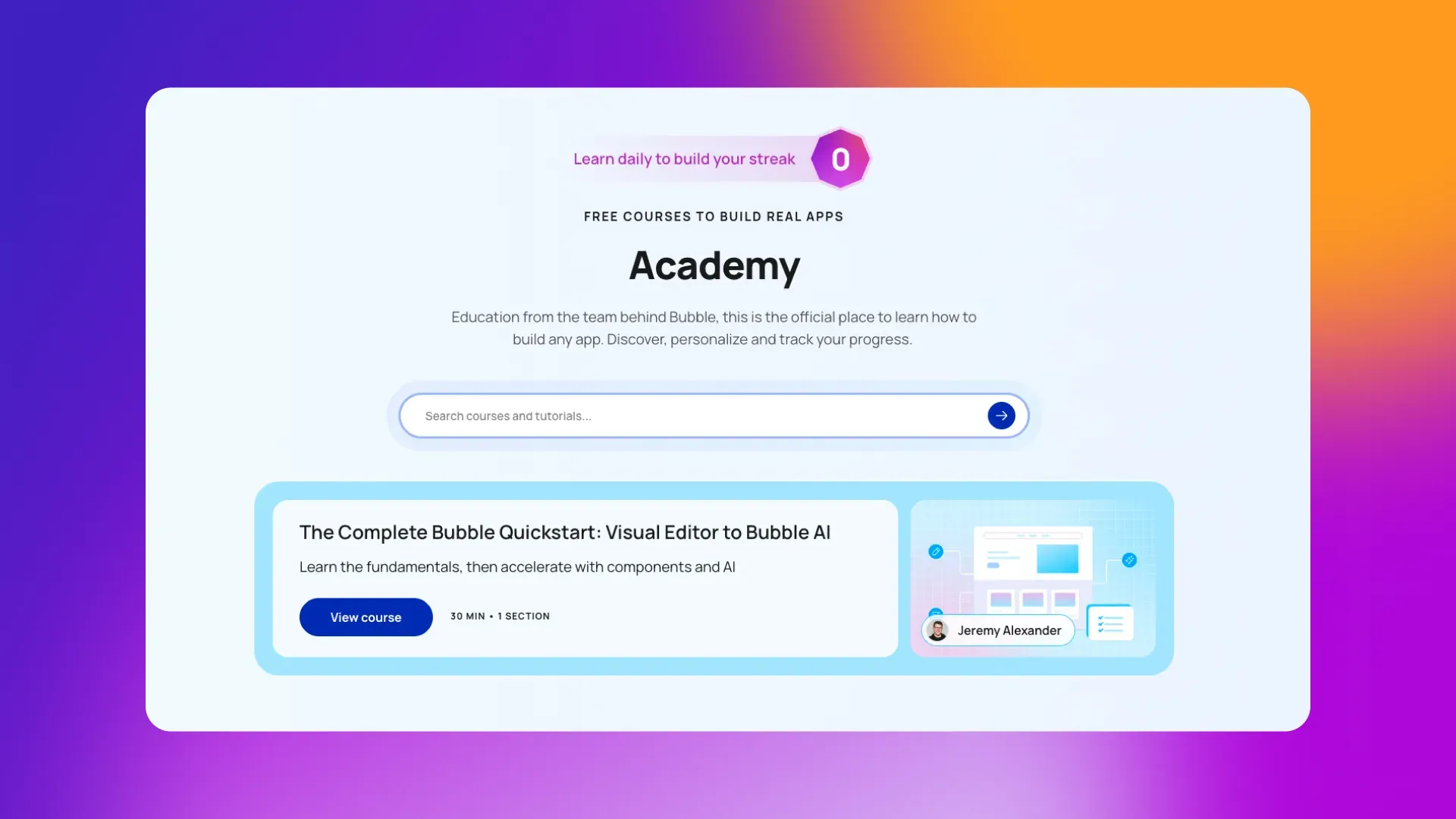
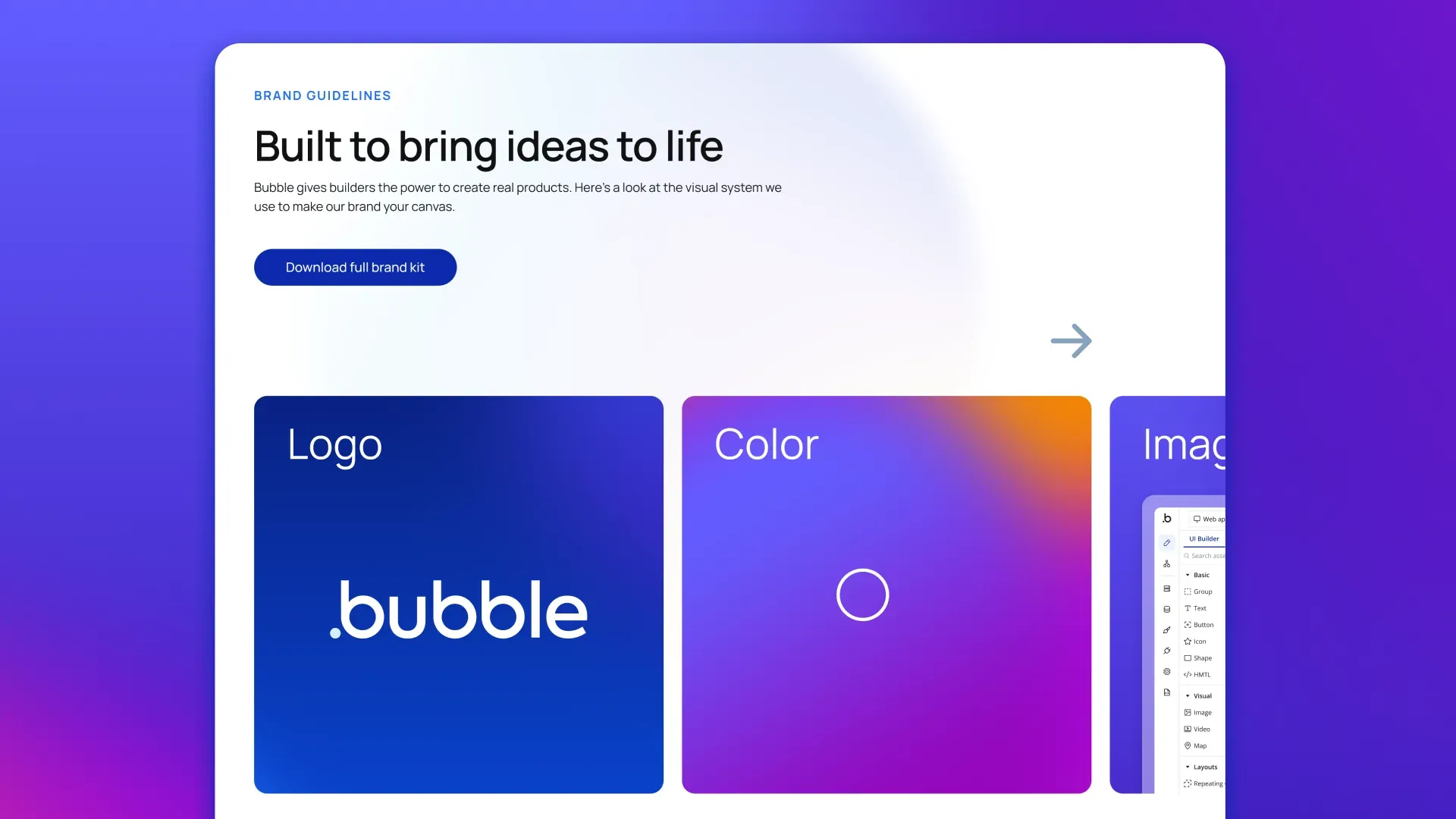
- Digital experiences: We built out the Bubble brand guidelines, Bubble Academy, and the in-editor Bubble AI Agent (beta) because we wanted builders to have support close at hand instead of getting stuck.
Build your brand and your app with Bubble
Building a brand people remember usually means juggling a designer, a developer, and a lot of back-and-forth just to get the colors, logo, voice, and product feel to match. Bubble lets you do it all in one place, without writing a line of code.
Bubble is the only fully visual AI app builder that lets you vibe code without the code. Generate a working app with Bubble AI, then make it yours in the visual editor, right down to the colors, typography, and logic. Chat with the AI Agent whenever you want a hand.
Frequently asked questions about brand elements
What are the 7 elements of brand?
While different frameworks use different counts, the seven most commonly cited brand elements are your brand name, logo, color palette, typography, tagline, brand voice, and imagery. These core assets work together to create a cohesive identity that customers can easily recognize.
How many brand elements are there?
The exact number depends on the framework you use: Some experts cite four core elements, while others list seven, 10, or more. This guide covers 15 essential elements across four categories, including strategic foundations, visual identity, linguistic components, and experiential touchpoints, to help you build a complete brand system, not just a visual identity.
Which brand elements should startups prioritize first?
Start with your brand name, logo, color palette, and brand voice. These foundational elements build recognition and create cohesive first impressions, allowing you to launch and iterate while you develop additional assets.
What’s the difference between brand elements and brand identity?
Brand elements are the individual, tangible components you create — like your logo, colors, and voice. Brand identity is the holistic system those elements form when used together to create your complete brand experience.
What are the 4 core elements of a brand?
The four most foundational elements of any brand are typically the brand name, logo, color palette, and brand voice. Together, these form the minimum viable brand identity needed to launch a product or company.
Build for as long as you want on the Free plan. Only upgrade when you're ready to launch.
Join Bubble